Auto Diagnostics
Auto Diagnostics in Oceanside, CA
Modern vehicles rely on computers, sensors, control modules, and electronic systems to monitor everything from engine performance and emissions to transmission operation, braking, steering, and driver assistance features. When something is not working as intended, your vehicle may store information that helps begin the diagnostic process. Interpreting that information correctly requires more than reading a fault code.
At Lael's International Auto Service, we provide professional auto diagnostics for drivers throughout Oceanside and North County San Diego. Whether your Check Engine Light is on, your vehicle has developed an intermittent problem, or another warning message has appeared, our goal is to identify the underlying cause before recommending repairs.
We diagnose domestic, Asian, European, and luxury vehicles, with a strong focus on BMW, Mercedes-Benz, Audi, and Volkswagen. Our technicians combine professional diagnostic equipment, current service information, visual inspections, system testing, and road testing when appropriate.
Schedule Your Diagnostic Appointment or call (844) 417-0991.
Why Professional Vehicle Diagnostics Matter
Many warning lights and drivability concerns can have several possible causes. Two vehicles displaying the same fault code may need completely different repairs. Several warning lights may also be triggered by one underlying electrical, mechanical, or communication problem.
A diagnostic trouble code tells a technician which system detected an operating condition outside its expected range. It does not always identify the failed part or explain why the condition occurred.
Confirming the cause may require live data analysis, electrical testing, mechanical inspections, manufacturer service information, and testing under the conditions where the symptom occurs. Taking the time to diagnose the concern properly can reduce unnecessary parts replacement and provide a clearer repair plan.
Understanding Dashboard Warning Lights
Dashboard warning lights are designed to alert you when a monitored system needs attention. Some lights indicate routine maintenance or a relatively minor concern, while others may warn of a condition that can affect safety, reliability, or engine operation.
The warning light itself is only a starting point. Professional testing is needed before a repair can be confirmed.
Check Engine Light
The Check Engine Light can be triggered by many engine, emissions, fuel, ignition, air intake, sensor, or electrical concerns. A loose or damaged fuel cap may cause a warning on some vehicles, but the same light can also appear for a misfire, air leak, fuel delivery concern, or another operating fault.
A stored code helps narrow the search, but additional testing is usually needed to determine why it was set.
Learn More About Check Engine Light Testing
ABS or Brake Warning Light
An ABS or brake warning light may indicate a concern involving the hydraulic brake system, wheel-speed sensors, electronic brake controls, brake fluid level, parking brake, or another related component.
Because braking systems affect vehicle control and stopping performance, these warnings should be inspected rather than ignored.
Battery or Charging System Warning
A battery warning light does not automatically mean the battery has failed. The concern may involve the alternator, charging system, drive belt, wiring, electrical connections, battery management system, or the battery itself.
Testing helps determine which part of the starting and charging system requires attention.
Related services include battery service, battery replacement, and alternator repair.
Engine Temperature Warning
An engine temperature warning may indicate that the engine is operating outside its intended temperature range. Continuing to drive an overheating vehicle can increase the risk of engine damage.
If the warning appears, stop driving when it is safe to do so and arrange an inspection. The cause may involve coolant loss, a water pump, thermostat, radiator, cooling fan, sensor, or another part of the cooling system.
Learn More About Cooling System Repair
Oil Pressure Warning
An oil pressure warning should be taken seriously. Low oil pressure can reduce lubrication to internal engine components.
The cause may involve a low oil level, an oil pressure sensor, a lubrication system concern, or an internal engine problem. The vehicle should be inspected promptly rather than driven unnecessarily.
Learn More About Engine Repair
Transmission Warning Messages
Some vehicles display a transmission warning light, drivetrain warning, or reduced-performance message when the transmission control system detects a fault.
The cause may involve electronic controls, sensors, fluid condition, engine operation, software, or internal transmission components. Diagnosis should come before assuming the transmission has failed.
Learn More About Transmission Repair
Multiple Warning Lights
Several warning lights appearing at once can be alarming, but they do not always indicate several separate failures.
Modern vehicle systems share information through electronic networks. Low system voltage, a communication fault, or a problem within one control system may trigger warnings in several others. Testing is required to determine whether the messages are related.
Our Auto Diagnostic Process
Accurate diagnostics involve much more than connecting a scan tool and reading stored codes. Every vehicle arrives with its own symptoms, operating history, maintenance history, and previous repairs.
Our diagnostic process is adapted to the concern and the vehicle being tested.
We Begin by Understanding the Concern
Your description of the problem provides valuable information. We may ask when the symptom occurs, whether the vehicle is hot or cold, how long the concern has been present, and whether it changes with speed, load, weather, or driving conditions.
Recent repairs, battery replacement, maintenance work, or changes in vehicle operation may also help guide the inspection.
We Communicate With the Vehicle
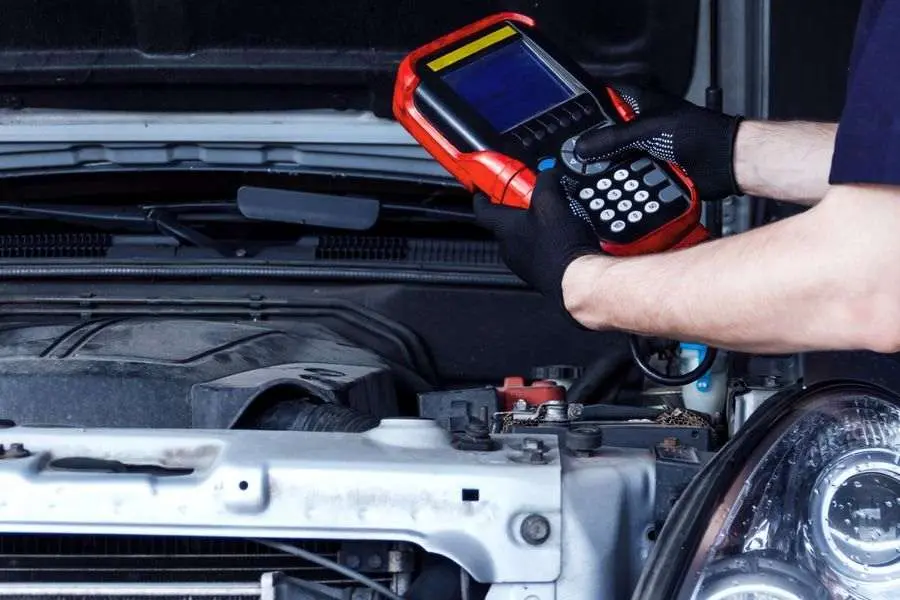
Professional diagnostic equipment allows us to communicate with the control systems supported by the vehicle. Depending on the make and model, this may include modules responsible for the engine, transmission, braking, steering, climate control, safety systems, body electronics, and driver assistance features.
We may review stored and pending fault codes, freeze-frame information, live operating data, system status, and manufacturer-specific information relevant to the concern.
We Inspect and Test the Related System
Electronic data is only part of a diagnosis. Depending on the concern, we may also inspect mechanical components, wiring, connectors, hoses, fluid levels, ignition parts, sensors, charging system performance, cooling system operation, or other related components.
Electrical testing may involve checking voltage, resistance, power supplies, grounds, signal operation, or communication between modules.
We Work to Confirm the Root Cause
One underlying problem can sometimes trigger several fault codes. A code may also be stored because a component is reacting to another fault elsewhere in the system.
Before recommending a repair, we work to confirm the most likely cause whenever possible. This helps reduce the risk of replacing a part that did not create the original problem.
We Explain the Results
After testing is complete, we explain what we found in clear language. If repairs are recommended, we discuss why they are needed and how the concern may affect safety, reliability, performance, or emissions.
If several items need attention, we help you understand which concerns may require prompt service and which can often be planned for later.
We Verify Approved Repairs
After an approved repair is completed, the related system is checked again when appropriate. Verification may include clearing fault codes, reviewing live data, confirming system operation, or road testing the vehicle.
What We May Check During Vehicle Diagnostics
No two diagnostic appointments are exactly alike. The tests performed depend on the symptoms, vehicle, systems involved, and information discovered during each stage of diagnosis.
Testing may include:
- Manufacturer-specific diagnostic trouble codes
- Freeze-frame and live operating data
- Engine performance and drivability
- Fuel delivery and fuel control
- Ignition system operation
- Air intake and emissions systems
- Battery and charging system performance
- Starting system operation
- Electrical circuits, wiring, and grounds
- Sensors, actuators, and control modules
- Vehicle communication networks
- ABS and stability control systems
- Transmission data and electronic controls
- Cooling system operation
- Visible vacuum or fluid leaks
- Technical service information relevant to the concern
- Road testing when appropriate
Learn more about our digital vehicle inspections and complete auto repair services.
Why European Vehicles Require Specialized Diagnostics
Modern European vehicles often contain a high level of integration between mechanical systems, electronics, software, and onboard communication networks.
Engine performance, transmission operation, braking, steering, climate control, battery management, and driver assistance systems may all exchange information. A concern in one system can sometimes affect several others.
Diagnosing these vehicles may require manufacturer-compatible equipment, vehicle-specific service information, an understanding of system operation, and careful interpretation of live data. A basic code reader may retrieve some information, but it does not replace a complete diagnostic process.
BMW Diagnostics
BMW vehicles may use advanced engine controls, xDrive systems, battery management, adaptive suspension, electronic steering, and numerous connected modules.
Depending on the concern, diagnosis may require reviewing manufacturer-specific codes, live operating values, adaptations, electrical circuits, and communication between modules.
Learn More About BMW Repair in Oceanside
Mercedes-Benz Diagnostics
Mercedes-Benz vehicles integrate engine, transmission, braking, suspension, comfort, and safety systems across the vehicle. A warning message may be related to a sensor, mechanical component, voltage concern, wiring fault, or communication problem.
We use a systematic testing process to evaluate the relevant system before recommending repairs.
Learn More About Mercedes-Benz Repair in Oceanside
Audi Diagnostics
Audi vehicles may combine turbocharged engines, direct fuel injection, Quattro drivetrains, electronic parking brakes, advanced driver assistance features, and networked control modules.
Accurate diagnosis often requires understanding how these systems work together and verifying why a fault was recorded before replacing components.
Learn More About Audi Repair in Oceanside
Volkswagen Diagnostics
Volkswagen vehicles may use TSI engines, DSG transmissions, 4MOTION all-wheel drive, electronic braking systems, and multiple control modules.
Manufacturer-specific information and system testing can be important when diagnosing drivability, transmission, electrical, or warning-light concerns.
Learn More About Volkswagen Repair in Oceanside
Diagnostic Services We Provide
Vehicle diagnostics extend beyond Check Engine Light testing. We investigate many warning messages, performance concerns, intermittent problems, and electronic system faults.
Check Engine Light Diagnostics
We evaluate stored codes, operating data, and related engine or emissions systems to determine why the warning appeared.
Learn More About Check Engine Light Testing
Engine Performance Diagnostics
Rough idle, hesitation, misfires, loss of power, poor fuel economy, hard starting, and unusual engine behavior can have several possible causes. Testing may involve ignition, fuel delivery, air intake, sensors, emissions controls, turbocharger operation, or engine mechanical condition.
Learn More About Engine Repair
Electrical System Diagnostics
Electrical testing may involve batteries, alternators, wiring, grounds, connectors, sensors, modules, switches, actuators, or vehicle communication networks.
Learn More About Auto Electrical Service
Battery and Charging System Testing
A no-start condition, slow cranking, battery warning, or repeated battery failure may be caused by the battery, alternator, wiring, electrical connections, parasitic draw, or battery management system.
Learn More About Battery Service
Transmission Diagnostics
Delayed engagement, harsh shifting, slipping, warning messages, vibration, or reduced performance may involve electronic controls, engine operation, fluid condition, sensors, software, or internal transmission components.
Learn More About Transmission Repair
Cooling System Diagnostics
Coolant loss, overheating, temperature warnings, cooling fan concerns, and changes in heater operation require inspection of the related cooling system components.
Learn More About Cooling System Repair
ABS and Brake System Diagnostics
Brake and ABS warnings may involve wheel-speed sensors, wiring, hydraulic components, control modules, brake fluid level, or another part of the braking system.
Air Conditioning and Climate Control Diagnostics
Weak cooling, inconsistent temperature, unusual airflow, or climate-control warnings may involve refrigerant charge, sensors, actuators, electrical controls, compressors, or other HVAC components.
Learn More About Auto Air Conditioning Repair
Pre-Purchase Vehicle Inspections
A pre-purchase inspection can provide useful information about a used vehicle's current mechanical condition, visible maintenance needs, and electronic warning systems.
No inspection can predict every future repair, but it may help you make a more informed buying decision.
Learn More About Buyer's Inspections
Why Accurate Diagnostics Can Save Time and Money
A diagnostic trouble code does not automatically identify the part that should be replaced. It reports that a monitored condition is outside its expected range.
For example, a sensor may report an incorrect value because the sensor has failed. It could also be reacting to damaged wiring, low voltage, an air leak, a mechanical problem, or another condition elsewhere in the system.
Replacing the sensor without confirming the cause may not solve the original concern. Professional diagnostics focus on determining why the fault occurred before a repair is recommended.
Intermittent Concerns Require a Methodical Approach
Some problems appear every time the vehicle is driven. Others occur only when the engine is cold, after an extended drive, during acceleration, at a certain speed, or under particular weather conditions.
Intermittent concerns may require reviewing stored information, monitoring live data, inspecting electrical connections, recreating the operating conditions, or performing additional testing over time.
Although an intermittent problem can require more diagnostic time, systematic testing is generally more useful than replacing parts based on an unconfirmed theory.
Diagnostics Support the Correct Repair Plan
Accurate testing provides information that can be used to develop a repair plan based on evidence. It helps distinguish between a failed component, a wiring problem, a software-related concern, routine maintenance, or a larger mechanical issue.
Our goal is to explain the findings clearly and help you decide how to proceed based on your vehicle's condition.
Expert Insight
Vehicles sometimes arrive after one or more parts have already been replaced without resolving the original problem. In these situations, we begin with the current symptoms and test the system rather than assuming the previous repair identified the correct cause.
A stored code can point technicians toward the system that needs attention, but confirming the root cause is what allows a repair to address the actual concern.
Auto Diagnostics for Oceanside and North County San Diego
Lael's International Auto Service provides professional vehicle diagnostics for drivers in Oceanside and nearby communities, including Carlsbad, Vista, Encinitas, Leucadia, and the Camp Pendleton area.
Whether you are dealing with a Check Engine Light, intermittent electrical problem, poor engine performance, transmission warning, cooling system concern, or another drivability issue, we use a structured process to investigate the cause before recommending repairs.
We diagnose many domestic, Asian, European, and luxury vehicles, including BMW, Mercedes-Benz, Audi, Volkswagen, Porsche, MINI, and Lexus models.
Frequently Asked Questions About Auto Diagnostics
What is included in a vehicle diagnostic?
The diagnostic process depends on the vehicle and concern. It may include discussing the symptoms, retrieving manufacturer-specific fault codes, reviewing live data, performing visual inspections, testing circuits or components, consulting service information, and road testing when appropriate.
Is reading a fault code the same as diagnosing the problem?
No. A fault code identifies the system that recorded an operating condition outside its expected range. It does not always identify the component that caused the problem. Additional testing is often required.
Does a Check Engine Light always mean something serious?
No. Some causes are relatively minor, while others can affect performance, emissions, or engine operation. Diagnostic testing is the only reliable way to determine why the light came on.
What should I do if the Check Engine Light is flashing?
A flashing Check Engine Light may indicate a condition such as a severe misfire that can damage the catalytic converter or affect drivability. Reduce unnecessary driving and arrange an inspection promptly.
Can you diagnose intermittent problems?
Yes. Intermittent concerns may require additional information and testing because they occur only under certain temperatures, speeds, loads, or driving conditions.
We review the symptoms, available diagnostic data, related systems, and operating conditions to help identify the cause.
How long does vehicle diagnostics take?
The time required varies by vehicle and concern. Some problems can be identified relatively quickly, while complex or intermittent faults may require more testing before the cause can be confirmed.
Can several warning lights be caused by one problem?
Yes. Vehicle modules share information with one another, so one electrical, voltage, sensor, or communication problem may sometimes trigger warnings in several systems.
Can a weak battery cause warning lights?
Yes. Low battery voltage or charging system problems may affect electronic systems and module communication on some vehicles. Testing is needed to determine whether the battery, charging system, or another component is responsible.
Can diagnostics identify a transmission problem?
Diagnostics can provide important information about transmission controls, stored faults, operating data, sensors, fluid condition, and related engine systems. Additional mechanical testing may be needed depending on the concern.
Can you diagnose electrical problems?
Yes. Electrical diagnostics may involve testing batteries, charging systems, wiring, grounds, sensors, switches, actuators, modules, and vehicle communication networks.
Do you diagnose BMW, Mercedes-Benz, Audi, and Volkswagen vehicles?
Yes. We provide diagnostics for many BMW, Mercedes-Benz, Audi, and Volkswagen vehicles. The available testing and service procedures depend on the model, year, systems involved, and concern.
Can you diagnose a problem over the phone?
We can discuss the symptoms and help determine an appropriate next step, but an accurate diagnosis usually requires inspecting and testing the vehicle. Similar symptoms can have several different causes.
What if another shop has already replaced parts?
We begin with the vehicle's current symptoms and available repair history. From there, we perform the testing needed to evaluate the concern rather than assuming the previous repair confirmed the underlying cause.
Do you perform pre-purchase inspections?
Yes. A pre-purchase inspection can identify many visible mechanical, maintenance, and electronic concerns before you buy a used vehicle. No inspection can predict every future repair, but it can provide useful information about the vehicle's current condition.
Will diagnostics tell me exactly how much the repair will cost?
Diagnostics are used to identify the cause and determine which repair may be needed. Once the concern has been evaluated, we can explain the findings and provide recommendations for approved work.
Schedule Auto Diagnostics in Oceanside, CA
If your vehicle has a warning light, unusual behavior, reduced performance, or an intermittent problem, professional diagnostics can help identify the cause before parts are replaced.
At Lael's International Auto Service, we combine professional diagnostic equipment, current service information, careful testing, and experience with European and other modern vehicles. We explain what we find and recommend repairs based on evidence rather than assumptions.
Schedule Your Diagnostic Appointment or call (844) 417-0991.
We are a Digital Shop
The Lael's International Auto technicians use the latest technology to not only tell you if there are any issues with your vehicle, but show you. If we uncover an issue the photo will be e-mailed to you for your records. At the end of every visit you will receive a detailed report regarding the general health of your vehicle. Our #1 goal is to keep you safe on the road.
Read more